From growing up in Lusaka, Zambia, to finding his calling in psychiatry, the addiction and eating disorders specialist reflects on belonging, the stories that shape us and the joy of making time for what we love.
Trigger warning: This article discusses mental illness, addiction, trauma and suicide.

Growing up, I loved Frasier. These days, it is part of my routine whenever I work late. And yes, it was on while I worked on this interview. The sitcom follows Dr Frasier Crane, a psychiatrist who returns to Seattle to host a radio call-in show. He and his brother, fellow psychiatrist Dr Niles Crane, are better at analysing other people than sorting out their own lives. The Crane brothers were my introduction to psychiatry, so interviewing Dr Xavier Mulenga felt like a full-circle moment. Sadly, there was no sherry consumed during the interview. Frasier fans will understand.
I first met Xavier on 6 December 2025 through his partner, a dear friend of mine. The three of us went for dinner in Surry Hills and were still talking three hours later. We only left because the venue was closing. With three people who love to talk at the same table, we were always going to need a deadline.
A fun fact about Xavier and I is that we both once called Lusaka, Zambia, home. He was born and raised there, while I lived there for about seven years before moving to Perth, Western Australia when I was eight years old. When we caught up for breakfast in St Leonards on 13 September 2026, I wanted to understand how he holds on to that zest for life while working so closely with people in distress.
The distance between leaving and belonging
Before Australia, there was a childhood in Lusaka that Xavier remembers warmly. A “very good childhood,” he says, acknowledging the advantages his parents’ success in business afforded him. Private schooling, sport and opportunities to explore his interests were accompanied by an emphasis on doing well academically. “Very typical African house,” he adds, and we understand each other immediately.
When it came time to consider studying overseas, Australia was not the obvious choice. The United Kingdom and Canada were more familiar destinations, but his mother had been reading about Australian universities, comparing costs and considering what might come after graduation. “Why Australia?” Xavier remembers thinking. His knowledge of the country was limited, and choosing where to live involved prospectuses rather than the endless supply of videos and opinions available to a student today.
Xavier considered Perth, where other African students he knew were looking, before deciding he wanted to try somewhere different. Melbourne sounded cold. Brisbane offered warmer weather and lower costs than Sydney. Listening to him describe making the decision from university prospectuses, I try to imagine choosing a whole new life with a few pages about each city. At least he knew what kind of weather he was getting.
He still remembers when he arrived in Brisbane. It was 23 June 2004. He enrolled in biomedical science at Griffith University and lived on campus, where he made friends from countries he might otherwise have known very little about. “The United Nations,” I suggest as he describes the group. He also remembers going out “Thursday, Friday, Saturday, Sunday … then go to uni on Monday”. I have to laugh. There is something particularly funny about hearing a four-night party schedule recounted over breakfast by someone who went on to become an addiction psychiatrist.
His first year of university was also one of his hardest. He missed his parents and the ease of being around people who already understood where he came from. In Lusaka, he could see how much his family’s position and connections helped him. In Brisbane, he was learning what it felt like to be visibly in the minority. Questions about how he spoke English could make him feel like an outsider before a conversation had properly begun. He found connection within the Zimbabwean community, particularly when there were relatively few Zambians around him.
Eventually some of his university friends decided to return home, where family, friendships and professional opportunities offered a different kind of future. Xavier understands that decision. “There’s love at home. Why am I here?” he says, capturing a question that can sit beneath the impressive story of moving overseas. Staying takes more than a degree or a job offer. You also need reasons to feel that the life you are building belongs to you.

Xavier at Perth Airport on 22 June 2004, the day he first arrived in Australia. He flew to Brisbane the following day.
The town that was behind him
Xavier found some of that feeling in Wollongong. He moved there in 2008 to study medicine as part of the University of Wollongong’s second intake. The medical school was new enough that people around town knew who the students were. Sometimes someone would buy them a drink. Others volunteered to help them practise clinical examinations. As he tells me about the people who put their hands up to be examined by a group of students, I admit I am not sure I would have been quite so generous. Xavier laughs. He remembers people accepting that doctors had to learn somewhere and deciding they were happy to be part of it. “The whole town was behind you,” he says.
My favourite detail is that he would sometimes see the bouncer from a night out at breakfast the next morning. It is an ordinary thing to remember years later, which is exactly why I like it. It tells me more about what it felt like to live there than any prospectus could have. The same people kept turning up in different parts of his day. Xavier had arrived in regional Australia half expecting someone to make him feel out of place. He remembers waiting for the remark that would tell him he was still an outsider. Sometimes it never came. People simply got to know him.
“I learned to love Australia,” he says of that period. He finished medical school in 2011 and stayed to work as a junior doctor. Some of his classmates still work at the hospital where they trained. Xavier thinks he might have been one of them if the psychiatry training he wanted had been available there. He wanted the best training he could get and eventually moved on to pursue it. Still, I like that when he tells me how he came to feel at home in Australia, he remembers the people who volunteered to help him learn and the faces he saw at breakfast.

Xavier celebrating St Patrick’s Day at the University of Wollongong pub in 2008.
The career he was already talking about
It was in Wollongong, first as a medical student and then as a junior doctor, that Xavier began working out what kind of doctor he wanted to be. Cardiology interested him and gastroenterology became a serious prospect. He took on placements and research and became known among his colleagues as the gastro guy. He had surgeons in his family and had seen how much of their time the work took. He could imagine himself in several areas of medicine, though surgery had never looked like a life he particularly wanted.
Meanwhile, psychiatry kept coming up. An uncle who had trained in the field before becoming a surgeon had lived with Xavier’s family for a time and told him stories about working with people experiencing serious mental illness. Xavier remembers hearing about people getting better. Years later, he could see how much he had taken in from those conversations. He was also already the friend people turned to when they wanted to talk something through. “I don’t think I realised how much I talked about mental health,” he tells me.
During a gastroenterology placement as a junior doctor, Xavier helped care for a young patient who was repeatedly admitted with severe alcohol-related illness. The patient was close to his own age, which made it particularly hard for Xavier to get his head around how unwell he was. He remembers feeling frustrated that the patient continued to drink as the consequences grew more serious. The team kept coming back to the same advice. Xavier had seen him in and out of hospital and felt he knew him reasonably well. When a psychiatrist invited him to sit in on an assessment, Xavier heard a conversation he had not had with the patient himself. What struck him was the way the doctor spoke to him, with “so much more grace and more patience”. The patient talked about experiences that had not come up in their earlier conversations and Xavier began to understand what drinking did for him. He had spent time treating the physical consequences and telling the patient what needed to change. Sitting in on the assessment made him realise how much there still was to ask.
After that experience, Xavier swapped an emergency rotation for one in psychiatry and found he enjoyed it. A partner at the time, who was a social worker, had already noticed how often he talked about the field. Some colleagues were more surprised. He had put enough work into gastroenterology that people assumed they knew where he was going. Xavier could have applied for both specialities, though he knew he would be tempted to return to the familiar one if he gave himself the option. He decided to apply for psychiatry and called his parents before submitting the application. From the seriousness of his tone, they thought he was about to tell them something considerably more dramatic. Xavier had been worried they might see his choice as a step down. His father’s response was simpler than Xavier had imagined. He was already a doctor and could choose the work that interested him. His mother reminded him how proud she already was. The people whose approval he had worried most about could hear his enthusiasm perfectly well. He began psychiatry training in 2014. “Once I started, then I knew it was for me.”
Even after finding work he liked, he reached a point where he needed a break from formal training. He had gone from school to university to medicine and had always had another assessment or exam ahead of him. He took a year out of the programme and kept working in regional roles. I enjoy hearing him describe the version of himself who thought he might settle into life on the coast. There was Jack Johnson music and the appeal of living near the ocean, even if, as he points out, “I can’t swim.” Working without another exam looming gave him a chance to enjoy doing the job. The year away reminded him how much he enjoyed psychiatry and how ready he was to return.
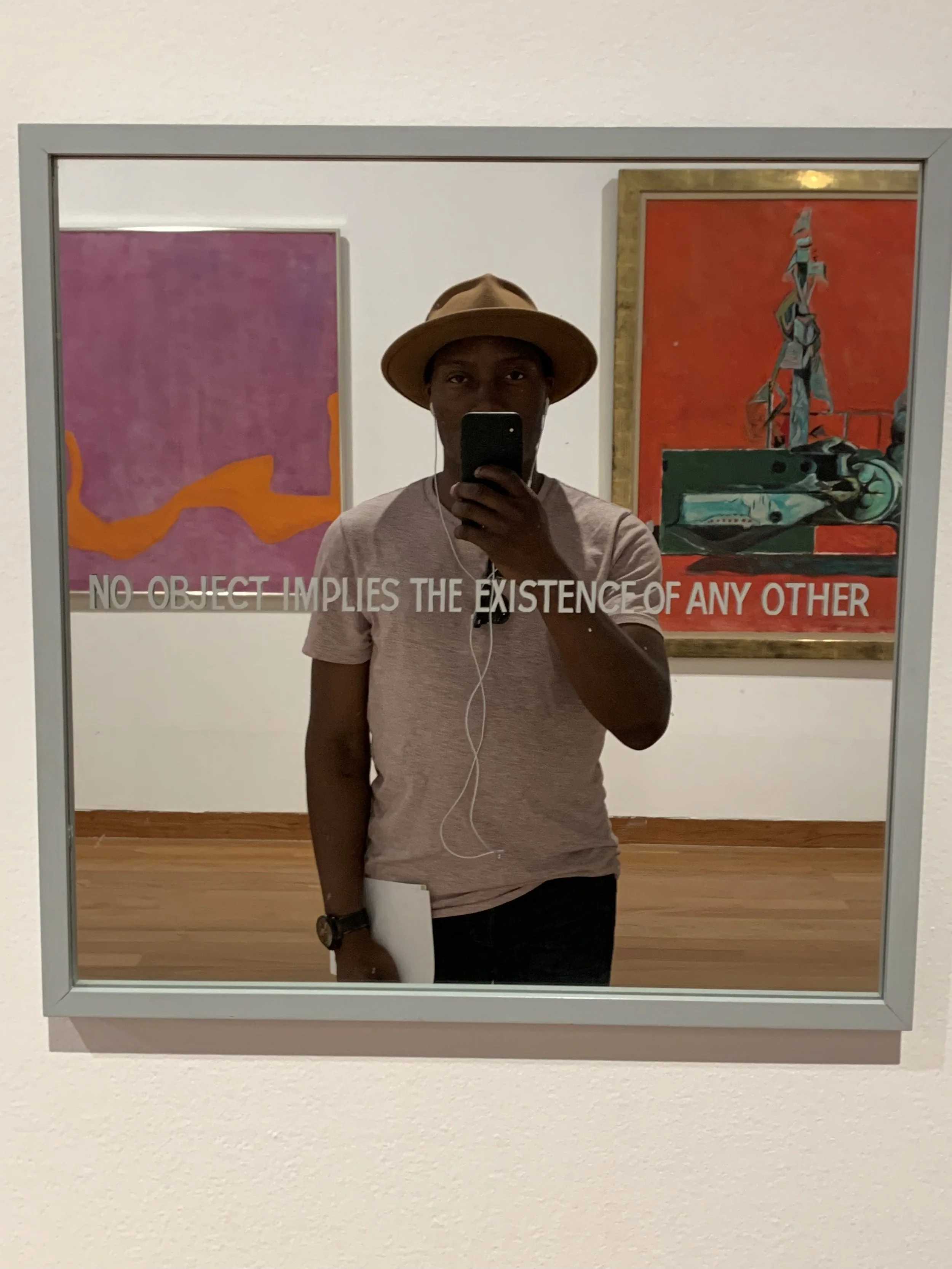
Xavier at the Art Gallery of Western Australia in 2019, on a weekend trip to Perth while working as a locum psychiatrist in Bunbury. His mother, an avid collector, introduced him to art.
Learning to listen
“You have to become very self-reflective,” Xavier says when I ask about the demands of the work. As a trainee, he met with a supervisor every week. They could talk about a consultation or debrief after something upsetting. Even if he arrived thinking he had nothing to discuss, a supervisor might remember an encounter that had affected them and ask how he had felt about it. Sometimes it took someone else bringing it up for him to realise he had something to say.
He describes taking a consultation to a supervision group and being asked why he had not followed up on something a patient had said. In the moment, he had thought it simply was not the right time to ask. In talking it through, he began to see how the patient had reminded him of someone in his own life and how that might have made him more reluctant to ask a hard question. He is able to laugh about someone spotting a connection he had not made himself. I can also see why those conversations mattered to him. Here was somewhere he could be honest about what he had missed and think through what he might do differently next time.
As we talk, our own conversation turns towards fashion and the ways people come to understand themselves. I explain how thinking about what I wear has led me into questions about identity, confidence and the way I want to appear in the world. Xavier follows the connection. “Everyone’s got their own,” he says of those ways into reflection. For one person, the starting point may be clothes. For another, it might be sport, family or a relationship. The language that helps someone understand their life has to mean something to them. He gives the example of someone who plays cricket at the same club as their father and grandfather. Ask what the sport means to them and you might end up talking about family, tradition or the comfort of doing something familiar. Ask me about a red dress and, as Xavier discovered, you might be there a while. I like that he takes the fashion detour seriously. It gives me a glimpse of what he does when someone starts with a subject they know well and ends up telling him something more about themselves.
That interest in the individual also helps explain his attraction to addiction work. “I like long-term projects,” he says. He enjoys following a story over time, understanding the patterns and helping someone find ways to change them. Recovery does not always offer the clean ending a clinician might hope for. There may be setbacks, repeated conversations and progress that looks modest from outside. Greater stability or less harm can still represent something significant. It is an approach that asks him to remain interested when a person is not getting better quickly. “What you see clearly, they can’t see,” he explains. Part of the work is finding a way to help them see it, without assuming that recognising a problem makes changing it straightforward.
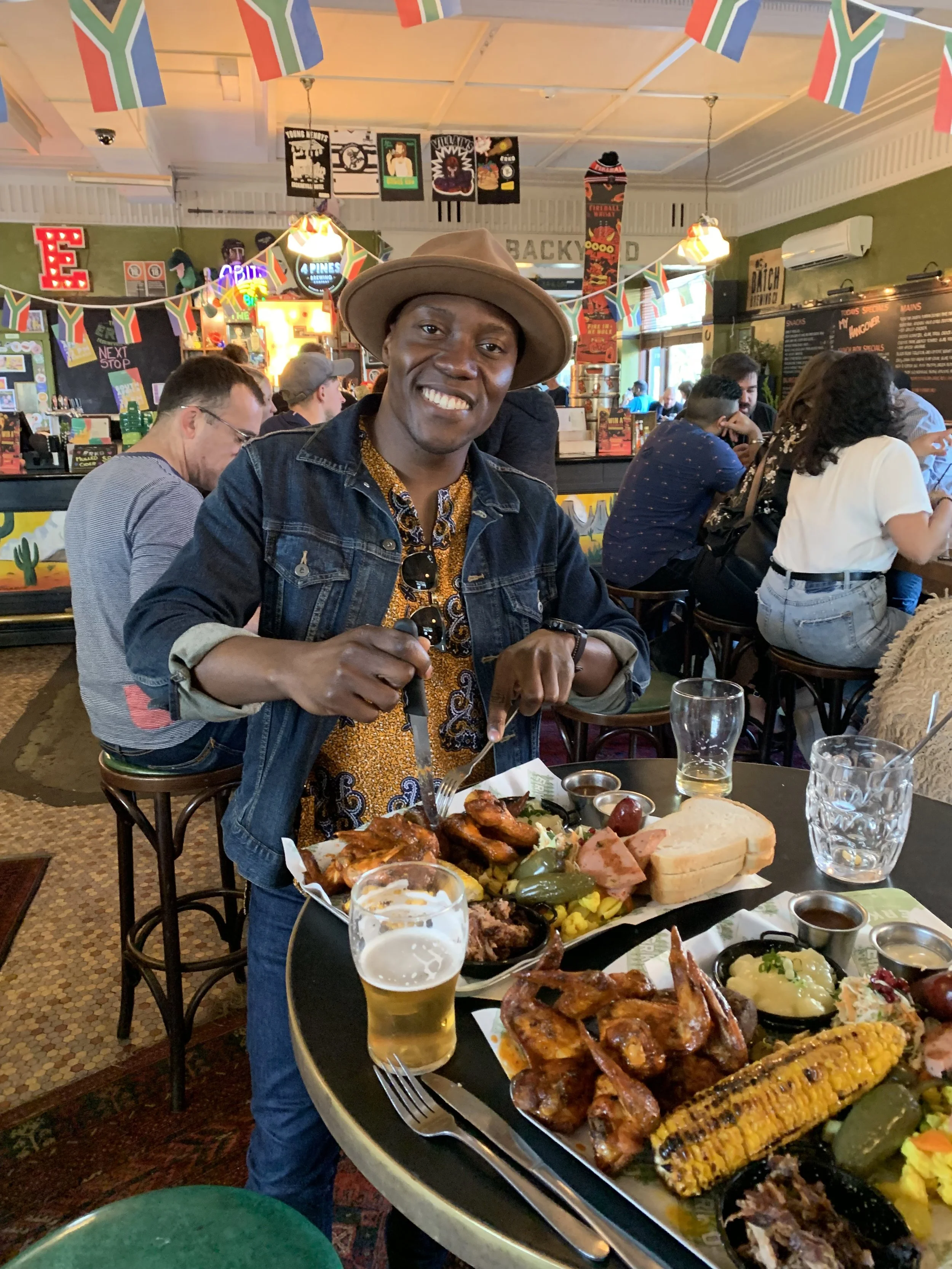
Xavier at a South African-themed barbecue at the Erko Hotel in Erskineville in 2019.
Our conversation turns to how easily alcohol fits into an ordinary week. You can have a drink to celebrate a promotion, to get through a difficult week or simply because you are having dinner with friends. At work, I have helped organise social events where one of the questions I have been most excited to answer is what cocktails we will serve. I enjoy putting a menu together. Xavier asks what would happen if we held the same event and deliberately left alcohol off the menu. I start thinking about how people might respond and, almost immediately, about what I could put on the mocktail menu. Apparently, I still want to design the menu.
In his 2021 piece for The Guardian titled “Am I an alcoholic?’: the blurred line between a daily drink and a drinking problem”, Xavier writes that alcohol “has its claws deep in Australian life”. He describes hearing “My partner says I drink too much” from people who come to see him. When a drink fits almost any occasion, it can take someone close to you to notice that the pattern has changed. Xavier also writes about what happens after someone recognises they need help. Detox can be one part of treatment, and the work of changing a habit continues when someone goes home to the same routines and pressures. It makes me think about how many parts of an ordinary week I had come to associate with pouring a glass. I tell Xavier about a small change I made at home. I used to pour a glass of wine while cooking, cleaning or winding down. Switching to non-alcoholic wine made me realise how much I simply enjoyed pouring something into a wine glass at the end of the day. I still like wine with friends and get excited about a good cocktail menu. Changing what I poured at home made me notice how many occasions for a drink I had invented without really deciding to.
We also talk about the pandemic and what happened to some habits when people spent so much time at home. I remember the early part of my working life and how easily a difficult day could become an occasion for a glass of wine. Xavier remembers seeing people whose drinking became more pronounced when they were isolated. The conversation takes him back to university, when going out four nights in a row could pass for an ordinary week and it would have seemed unusual for a student to ask for help with their drinking. He notices younger people coming in to talk about it now and wonders how many people from his own university days might have benefited from having that conversation earlier.
Then he brings up the difference between a bottle of Penfolds Grange and a cheap cask. We might envy the person who can afford Grange for a special occasion and raise an eyebrow at the person buying cask wine. As Xavier puts it, “it’s still alcohol”. In his work across public and private practice, he sees how easily a respected job or an outwardly successful life can obscure what is happening at home. Sometimes, he says, a person has spent years building a career and providing for their family, only to find that they have had very little time to be present in the lives of the people they love. Friendships have faded and there are not many people to call at the end of the day. In the way Xavier tells it, years of achievement can sit alongside a very plain admission. “I’m just lonely.”

Xavier in April 2022. He had just left Pitt Street Mall when a photographer stopped him and asked to take his photo. An impromptu shoot on an ordinary day.
Making it easier to begin
When I ask Xavier what he is most proud of, he talks about bringing African psychiatrists and other mental health professionals in Australia together. He describes a conference in Melbourne he wants to put together and his hopes for more outreach that includes social workers and trainees as well as psychiatrists. He is particularly proud of the work that reaches people in African diaspora communities who might have few opportunities to talk openly about mental health. It matters enough to him that he makes time for it outside his clinical work.
Our conversation comes back to how much you sometimes have to explain before you can talk about what brought you to therapy. If you have moved countries or grown up between cultures, something as simple as describing a family expectation can take a while. By the time you have explained why it matters, you may still be a long way from the thing you came in to discuss.
Xavier understands the appeal of speaking with someone who already knows some of that context. He also hears from people who would rather speak to someone outside their community because they worry about being judged or about who might hear that they have asked for help. He wants people to have that choice. He tells me about Zimbabwe’s Friendship Bench, where people can sit down with a grandmother and talk in a familiar setting. I can see why the example appeals to him. If talking about something is already hard, there is a lot to be said for starting somewhere you feel welcome.
He also talks just as plainly about getting support himself. “I’ve been to therapy,” he tells me. He remembers a friend quietly admitting he was seeing someone, even though he knew what Xavier did for a living. “Bro, I am a psychiatrist,” Xavier recalls telling him. The exchange makes me laugh. I keep thinking about how quietly his friend said it, even to someone who had already told him he had been to therapy. In his 2022 piece for The Guardian titled “If we all talked about suicide, wouldn’t that be better for everyone?”, Xavier remembers being surprised by how relieved some patients were when he asked whether they were thinking about suicide. Some told him that “no one had asked them this before”. He also writes about a father who wanted to know how he could make sure his daughter never attempted suicide again. Xavier understood why he wanted that certainty, even though it was something he could not give him. I think about that father alongside the people who were relieved to be asked. It can be hard to start a conversation when you are worried about what you might hear. For the person answering, it can mean finally getting to say something they have been carrying alone. Xavier puts the first step plainly. “You just have to ask.”

Xavier in his pink suit, the first he had tailored as a consultant psychiatrist. He treated himself in January 2022, six months after completing his specialist training. As he puts it, “I splurged a bit. I loved that suit.”
Keeping room for joy
I came to breakfast wondering how Xavier stays so full of life while doing emotionally demanding work. Some of the answer is in how readily he talks about supervision, therapy and taking time away from training when he needs it. He also makes a distinction between being someone’s psychiatrist and being someone’s friend. His friends can ask him for his professional perspective if they want it. Most of the time, they are just having a conversation. I appreciate this policy.
Away from work, Xavier reads, travels and loves the theatre and the arts. I have walked through Newtown with him and watched him stop to say hello to what felt like half the street. Plenty were artists themselves. Others were familiar faces from the performances he regularly attends. Jack Johnson takes him back to his time on the coast. Amapiano gets him on the dance floor. As for the gym, he has worked out what gets him through the door. “I know if I pay someone, I show up,” he says of his personal trainer.
“I like telling stories. I’ve always liked that.” Xavier wants to get back to writing, particularly about Black men and the things they care about that do not always come up when they are talking to one another. He describes walking into professional rooms where the conversation goes straight to money, property, marriage and children. He can hold his own in those conversations. He would also like to know what you are reading or which show has sent you down a rabbit hole. We talk about having room to be whimsical and how rarely that word comes up when men are invited to talk about themselves.
Off the back of this, we take another detour, this time through the Batman cartoons he grew up with and the ones he has returned to as an adult. There is Batman: The Brave and the Bold, Justice League and the experimental animation he remembers from MTV. We also have opinions about whether a perfectly good animated story needs to be remade in live action. I barely made it through the opening of the live-action Avatar: The Last Airbender, though I will make an exception for One Piece. Xavier has played one of the games. We could easily have spent the rest of breakfast comparing notes.

Xavier, all smiles on the steps in December 2020.
Before we finish breakfast, I ask Xavier one last question. Would he choose psychiatry again? “It was definitely the right speciality for me,” he says. I think of the medical student who found a home in Wollongong, the junior doctor who changed direction after hearing a patient tell his story and the friend who still has plenty to say about Batman. I had come to breakfast wondering how Xavier holds on to his zest for life when so much of his work involves listening to people on their hardest days. Part of the answer was right there at the table. He speaks openly about the help he has needed and with just as much enthusiasm about the things he loves. He still has stories of his own he wants to tell.
You do not have to be having one of your hardest days to talk to someone. If there is something you want to say or something about yourself you would like to understand, you can start with whatever words you have. I am glad there are people like Xavier in psychiatry who know how much it can take to get those first words out and are willing to tell you they have had to find theirs, too.
On a final note, if you are struggling, I encourage you to reach out for support. That might mean telling someone you trust how things have been or making an appointment with a health professional. You can start with whatever words you have, even if all you can say is, “I am having a hard time.” There is no shame in asking for help, and you deserve support before things feel overwhelming.
Yours, in style and curiosity
—
Linda Mulenda