Anna Rushmer Is Building Her Own Stage
From taking charge of a Year 5 school production to founding Wren Wants a Top Hat, the playwright, director, producer and musician is creating theatre entirely on her own terms.
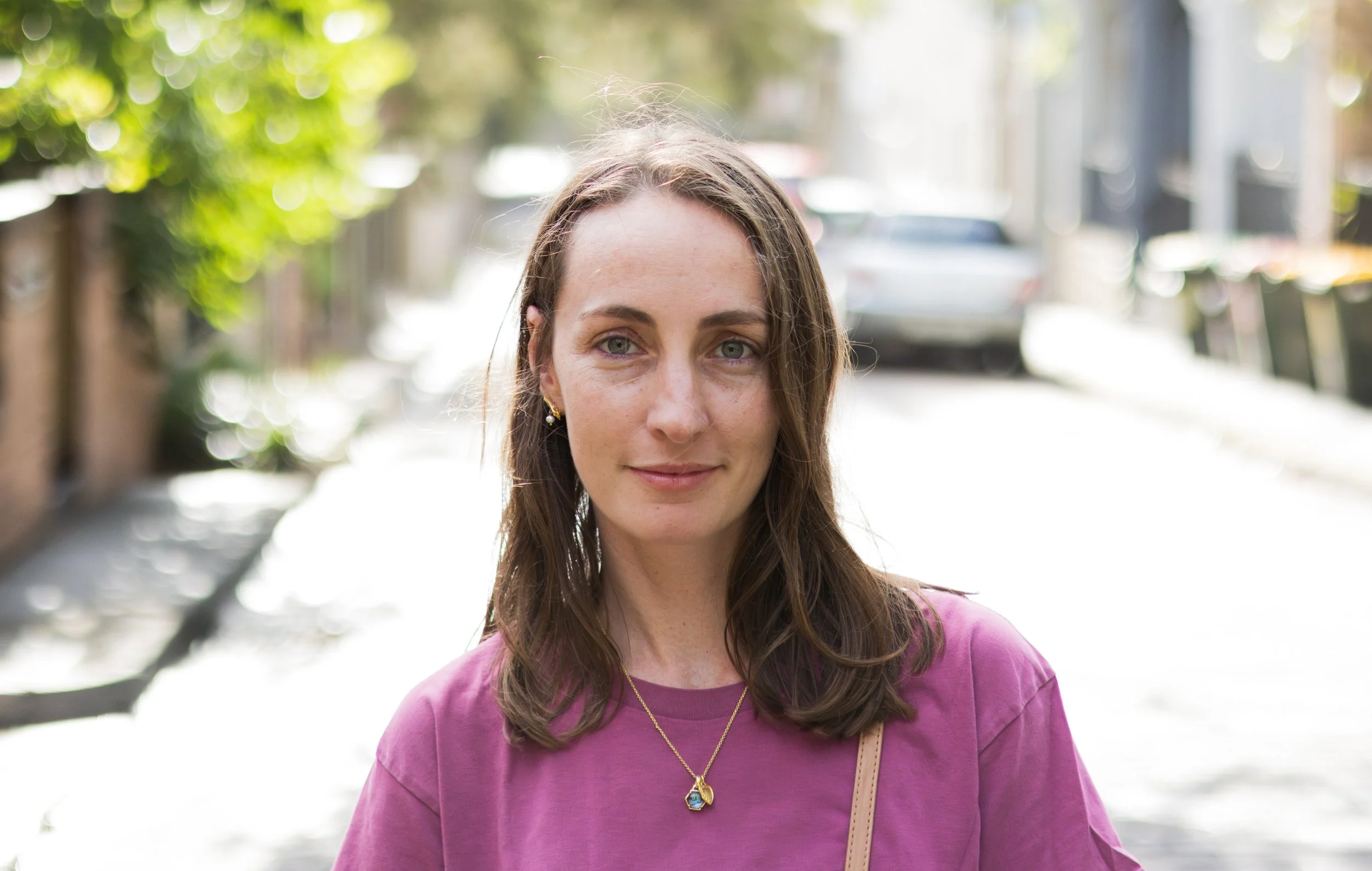
There are some people who surprise you more than once. Anna Rushmer is one of them.
I first met Anna almost two years ago on a football (soccer) pitch. We play in the same mixed social football (soccer) competition and before we had barely spoken, it was clear that she was exactly the sort of person you wanted on your team. She moved across the pitch with the confidence of someone who had been playing football for years, calmly weaving past opponents while the rest of us attempted to keep up.
Like many friendships, ours developed gradually. Conversations after the final whistle became longer chats and over time I learnt more about the person behind the football (soccer) boots. Then, one evening, Anna mentioned almost in passing that she was rehearsing for a new production. I assumed she was acting in it. Instead, she explained that she had written, directed and produced the work. She had also composed its music. I was in awe. Anna was doing almost everything required to bring an original production to the stage and I wanted to understand how. How does someone create an entire world from nothing? How do mythology, music and storytelling become a theatrical production? On 3 May 2026, over lunch, I asked Anna exactly that.
I expected us to spend the afternoon talking about theatre. We certainly did. Somewhere between stories of Year 5 competitions, classical music, mythology, Australian ghost stories and independent productions, I realised that our conversation was about something larger than putting on a play. It was about curiosity, persistence and the willingness to follow an idea for long enough to discover where it might lead.
Anna Rushmer has not waited for someone else to hand her a stage. She has built one herself and invited others onto it.
A Creative Life Without Clear Borders
Trying to describe what Anna does is harder than it should be because she is such a brilliant creative force. She writes plays, directs them, produces them and composes original music. She has founded a theatre company, created original productions and built a creative practice that moves between performance, storytelling and education. Every one of those titles is accurate, yet none quite captures the whole picture.
Anna smiles when I ask how she describes what she does. “I have never really wanted to choose just one thing,” she tells me. It is an answer that makes perfect sense. In Anna's world, writing does not end when the script is finished. A story continues through the way an actor moves across the stage, the rhythm of a scene, the placement of a musical cue and the feeling that lingers long after the lights come up. For Anna, those creative disciplines are not separate pursuits competing for her attention. They are different ways of telling the same story. Music, movement, performance and writing all become part of a larger conversation about how an audience experiences a piece of theatre. As she puts it, she has always been interested in “how stories work” and, just as importantly, how people experience them.
That philosophy sits at the heart of Wren Wants a Top Hat, the independent Sydney theatre company she founded to develop and stage original Australian work. Through the company, Anna has brought productions including Firehawk, Playing Diotima and Undine – An Australian Ghost Story to the stage. Yet Anna does not speak about her career as though it unfolded according to a carefully constructed plan. If anything, she describes it with surprising understatement. “I think I just kept making things,” she says. “There was never really a point where I decided this was what I was going to do. I just kept making things.”
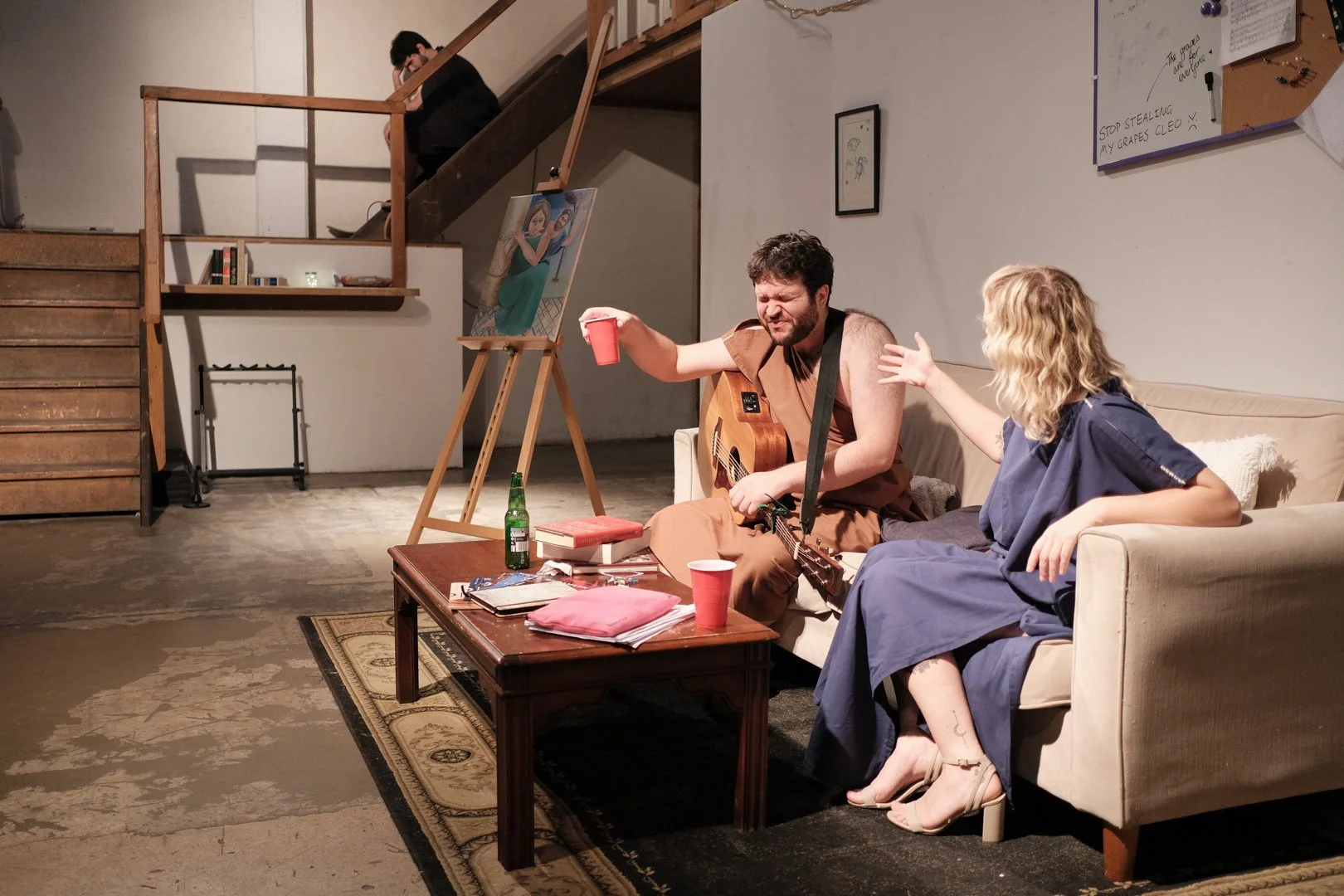
Playing Diotima - photo credit Jamie Simmons
Listening to her, it is tempting to describe that journey as accidental. It was anything but. Years of writing, rehearsing, producing and problem-solving have shaped the artist she is today. Long before she had a theatre company or a growing body of original work, Anna had already developed a habit of stepping forward whenever an idea needed someone to carry it. The first person to question that instinct was one of her classmates.
Nobody Put Me in Charge
When I ask Anna whether there was a moment she realised she wanted to work in theatre, she shakes her head. “I do not think there was one,” she says. “I was always making things.”
As a child, creativity was never something she consciously carved out time for. It simply existed alongside everything else. She learnt classical flute, danced, wrote stories and gravitated towards school performances. Looking back, it is easy to see how those interests would eventually converge, but at the time they simply felt like different ways of exploring the world.
The first real glimpse of the creative leader she would become came in Year 5, when her school entered the Tournament of Minds, a competition that challenged students to solve complex problems through creativity, collaboration and performance. Anna's group decided to create a theatrical production and without anyone formally appointing her, she naturally slipped into the role of organiser.
“I ended up organising everyone,” she laughs. She helped shape the story, coordinated rehearsals, thought about costumes and quietly kept the project moving while everyone else focused on their individual roles. Eventually, one of her classmates stopped and asked the question everyone else had apparently been thinking. “Who put you in charge?” Anna still laughs when she remembers her answer. “Nobody.” We both laugh. It is a funny story, but it also explains an extraordinary amount about the way Anna still works today. She does not wait for permission to begin. If she believes in an idea, she finds a way to make it happen. If something needs organising, she organises it. If a story deserves to exist, she brings together the people needed to tell it.
The production went on to receive a Highly Commended award, placing equal second. Anna remembers being less focused on how well the team had done and more on the fact that they had not won. “I was very upset we did not come first,” she admits, laughing. Looking back now, she smiles when she considers what that Year 5 experience might have revealed. “That was probably directing.”
Wanting to Tell the Whole Story
As Anna grew older, theatre gradually became less of an extracurricular activity and more of the way she made sense of the world. “I always loved stories,” she tells me. “Reading them. Watching them. Making them.”
By high school, the different creative interests she had pursued throughout childhood had begun to converge. Writing, performance, music and collaboration no longer felt like separate pursuits. They became different parts of the same creative process, each offering another way to understand how a story could be told.
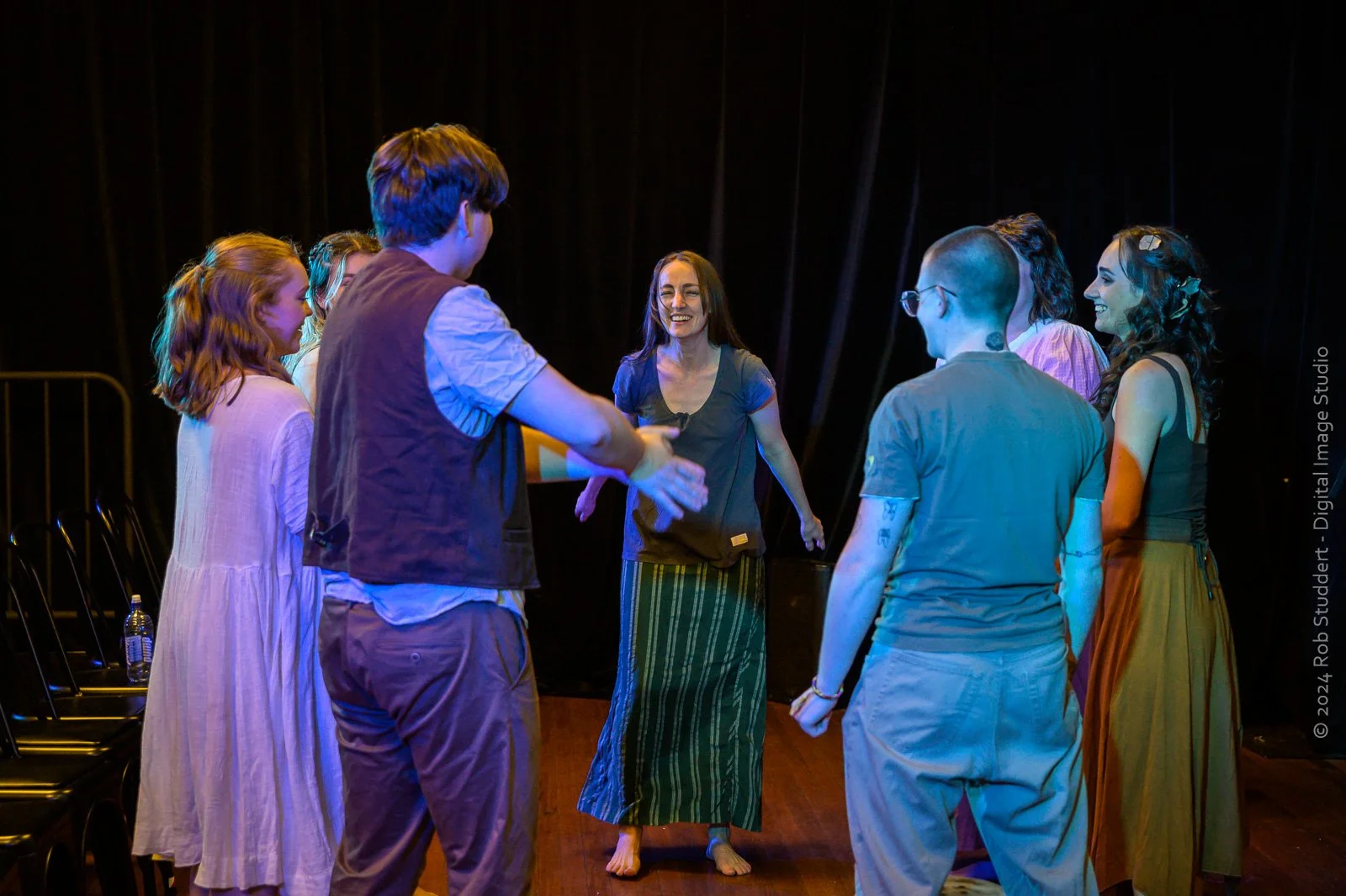
Undine – An Australian Ghost Story
Photo credit Rob Studdert
When it came time to complete her major body of work for her HSC, Anna chose to write a play. For many students, that would have been enough. For Anna, it was only the beginning. “I also wanted to perform in it,” she laughs. “Typical me.” The comment is light-hearted, but it reveals something that still defines the way she works today. Anna has never been interested in experiencing a story from only one perspective. She wants to know what it feels like to write the words, perform them, hear them spoken aloud and watch an audience respond. Every stage of the process offers a different way of understanding the same story.
“I have always been interested in how stories work,” she says. “Not just the story itself, but how people experience it.” Listening to her, it becomes clear that this curiosity has quietly shaped every role she has gone on to embrace. Writing taught her how stories are built. Performing taught her how they feel from the inside. Directing would later teach her how to bring together dozens of creative decisions into a single vision, while producing would teach her how to transform that vision into something audiences could actually experience.
At the time of her HSC however, Anna was not thinking several steps ahead. She was simply following the questions that interested her most. If you had asked her at eighteen what she imagined her future looked like, theatre would probably not have been the answer. “I did not really think that was something in the real world that you could do,” she says. Like many young creatives, Anna found herself wrestling with the idea that meaningful work needed to look practical. For a time, she imagined herself pursuing a very different path. “I wanted to save the world,” she says, laughing. “My vibe was, I am going to make the world believe in climate change and actually save the future.’”
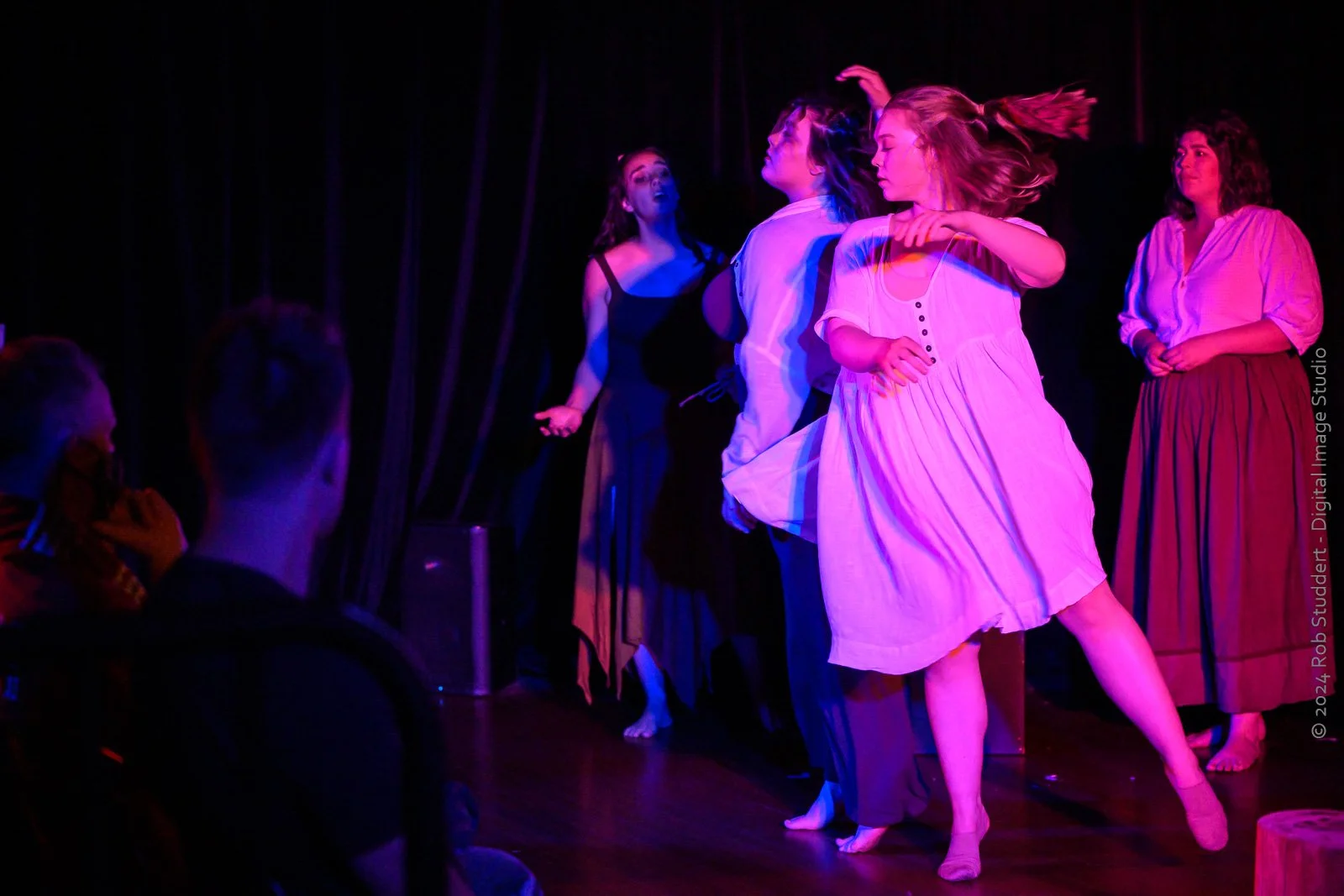
Undine – An Australian Ghost Story
Photo credit Rob Studdert
Instead of auditioning for the National Institute of Dramatic Arts (she was 17 at the time and they only accepted auditions from those 18 or older), she enrolled in a Bachelor of Communication at the University of Technology Sydney. Looking back, she does not see it as a detour from theatre. If anything, it deepened the questions she was already asking. “I have always been interested in why people do what they do,” she says. “Why we believe certain things. Why we tell certain stories.” University did not pull Anna away from storytelling. If anything, it gave her more to write about. “Theatre kept finding me,” she says. I suggest that perhaps she kept finding theatre. She laughs. “Probably both.”
As her confidence as a writer grew, so too did the scale of her ambitions. Her first full-length play, Helen of Sparta, marked an important milestone, drawing on Greek mythology to explore themes that would continue to shape her work: complex female characters, reinterpretations of familiar stories and the emotional truths hidden beneath familiar narratives. Wanting to continue developing her craft, Anna undertook a Masters in Music (Performance) from the Academy of Music and Performing Arts here in Sydney.
Finding Another Language
Music entered Anna's life long before theatre became her profession.
She began learning the flute as a child and spent years immersed in classical music, practising scales, performing repertoire and developing the discipline that comes with formal musical training. It was a world she knew intimately, yet for a long time it existed alongside her interest in theatre rather than as part of it. There was, however, something that never sat quite right. “I did not feel like I had any control over what I was playing,” Anna tells me. “I think I would have enjoyed music more if I had had more of my own expression.” It is a striking admission from someone who now composes original scores for her own productions. At the time, though, Anna was interpreting other people's work rather than creating her own. She admired the craft of classical music, but she longed for the freedom to shape something from the beginning instead of bringing someone else's vision to life. That desire stayed with her.
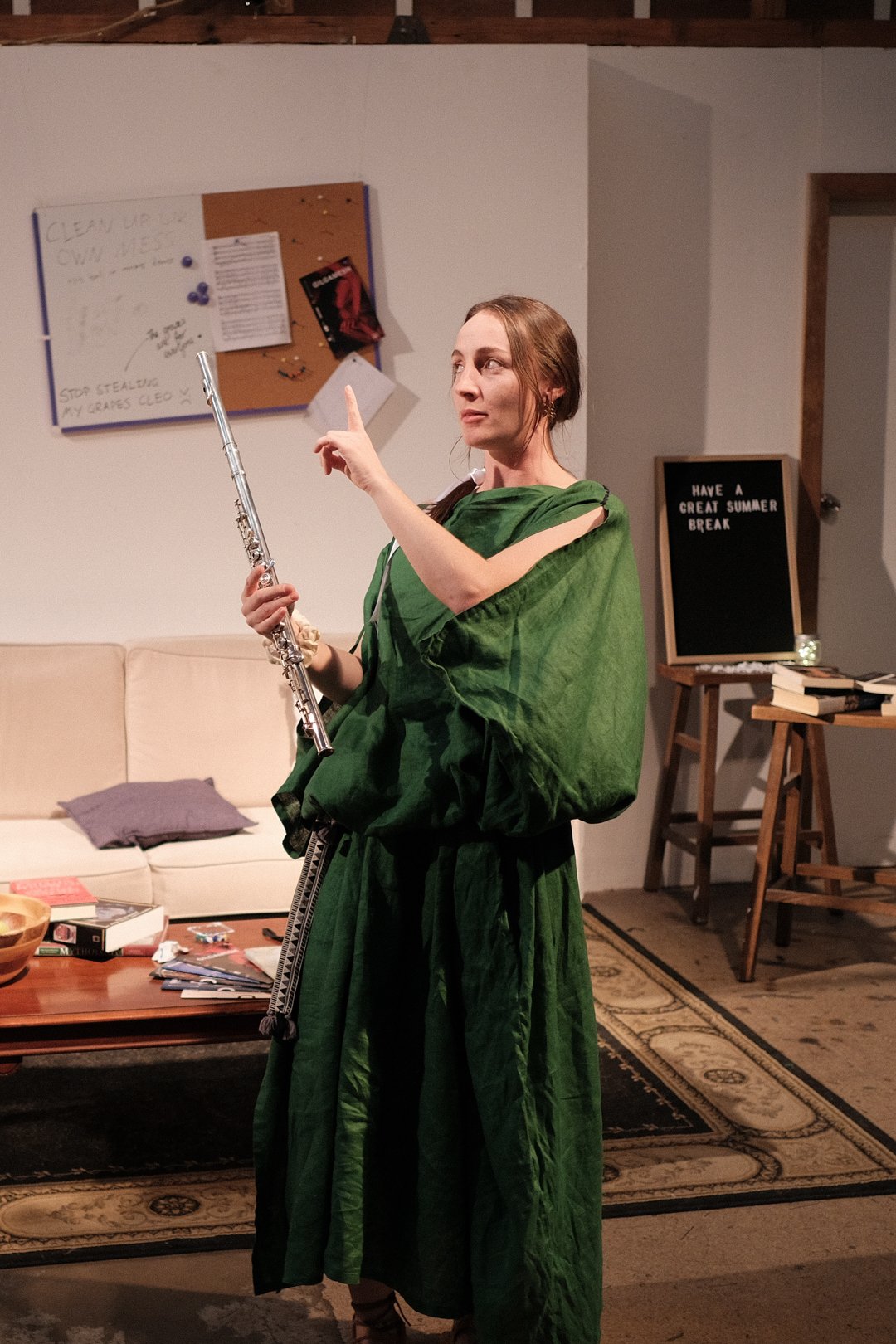
Playing Diotima - photo credit Jamie Simmons
As her work in theatre evolved, she began wondering whether music could become more than atmosphere or accompaniment. What if it could help tell the story itself? What if the score carried meaning alongside the dialogue, movement and staging? Those questions eventually led her to Undine – An Australian Ghost Story (Undine).
Based on the nineteenth-century German novella Undine, the production follows a mysterious young woman whose marriage grants her a soul but strips away the very qualities that make her who she is. Anna was drawn to the myth not because she wanted to faithfully recreate it, but because she saw something timeless within it. “The writer at the time was making a comment on marriage,” she explains. “She gets a soul, but by getting married she loses all of what makes her her.”
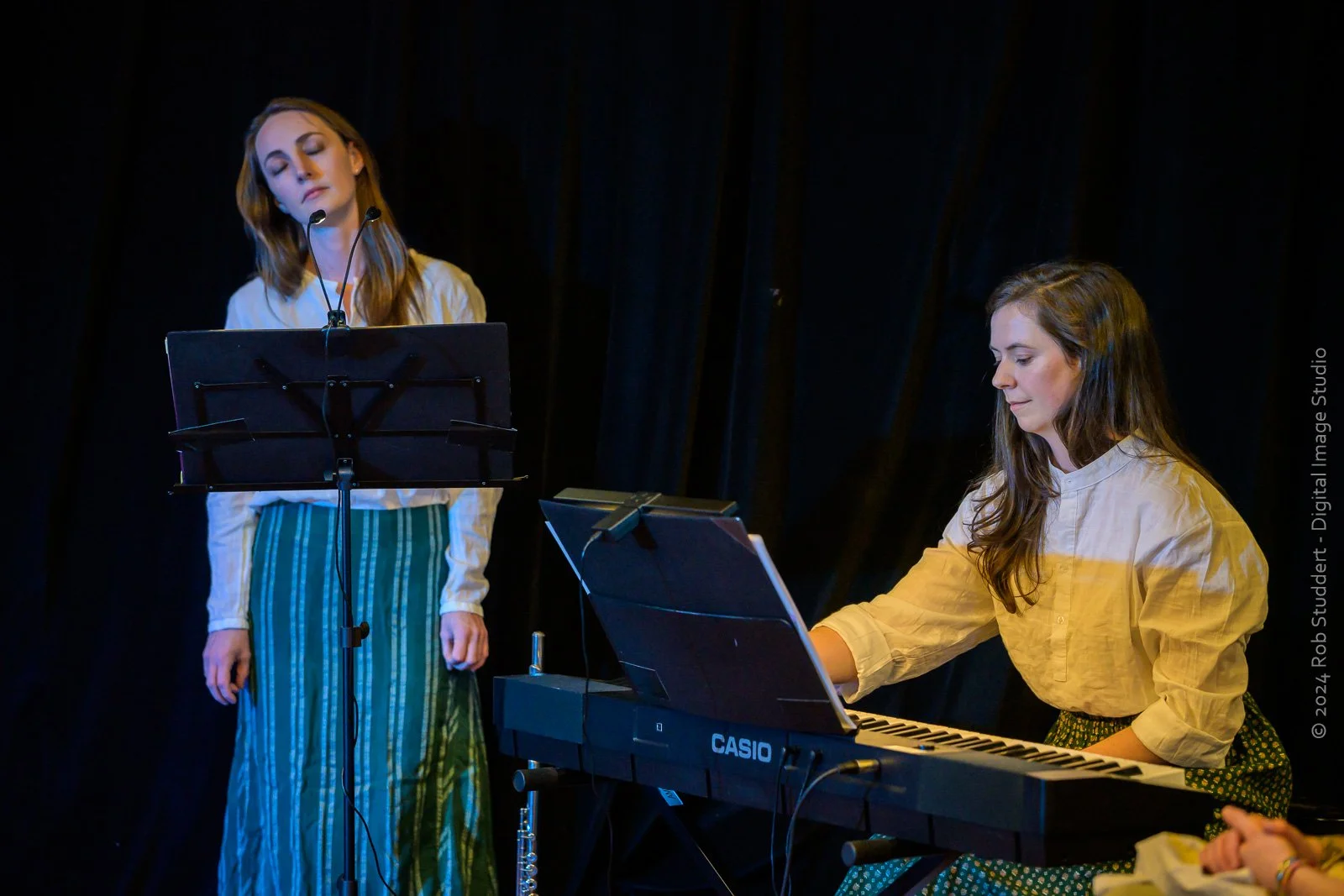
Undine – An Australian Ghost Story
Photo credit Rob Studdert
Rather than centring the romance, Anna became fascinated by another relationship within the story. “I was interested in the sister relationship between Undine and Bertalda.” That shift in perspective would become characteristic of her writing. Rather than accepting familiar stories at face value, Anna looks for the questions hiding beneath them, often uncovering emotional relationships that earlier interpretations leave unexplored.
Undine also became the moment when her creative worlds finally converged. “I started with Undine because I was looking at trying to incorporate music and dance together,” she says. “I wanted to use the music as part of the storytelling process.” Listening to Anna describe the production, it becomes clear that composing was never simply about writing beautiful music. It was another way of writing the play itself. Melody, rhythm and silence became narrative tools, shaping the emotional landscape alongside the script. “It was a fun learning experience,” she says with characteristic modesty. The phrase makes me smile. Most people would describe writing, directing, producing and composing an original work as an enormous undertaking. Anna describes it as a fun learning experience. That curiosity, always asking what could be done differently, what could be pushed further, runs through everything she creates. Undine was not simply another production. It was the first time Anna discovered that all the creative languages she had been developing for years could finally speak to one another.
Building a Stage of Her Own
For many artists, there comes a moment when they have to decide whether to wait for opportunities or create them. Anna chose the latter.
As she continued writing, directing and developing new work, it became increasingly clear that the kinds of stories she wanted to tell did not always fit neatly within existing pathways. They were ambitious, collaborative and often crossed creative disciplines. They drew on mythology and folklore, blended music with theatre and asked audiences to sit with questions rather than offering easy answers. So, Anna founded Wren Wants a Top Hat. The company's name is memorable, a little whimsical and slightly mysterious, much like the productions it creates. However, beneath that playfulness sits a clear purpose: to develop and stage original Australian work and to create space for stories that might not otherwise find their way onto a stage.
Listening to Anna speak about the company, one thing becomes immediately apparent. She rarely talks about theatre as something made by a single person. People often describe playwrights or directors as visionaries, but Anna resists the idea that the best ideas belong to one individual. Theatre, she believes, becomes richer through collaboration.
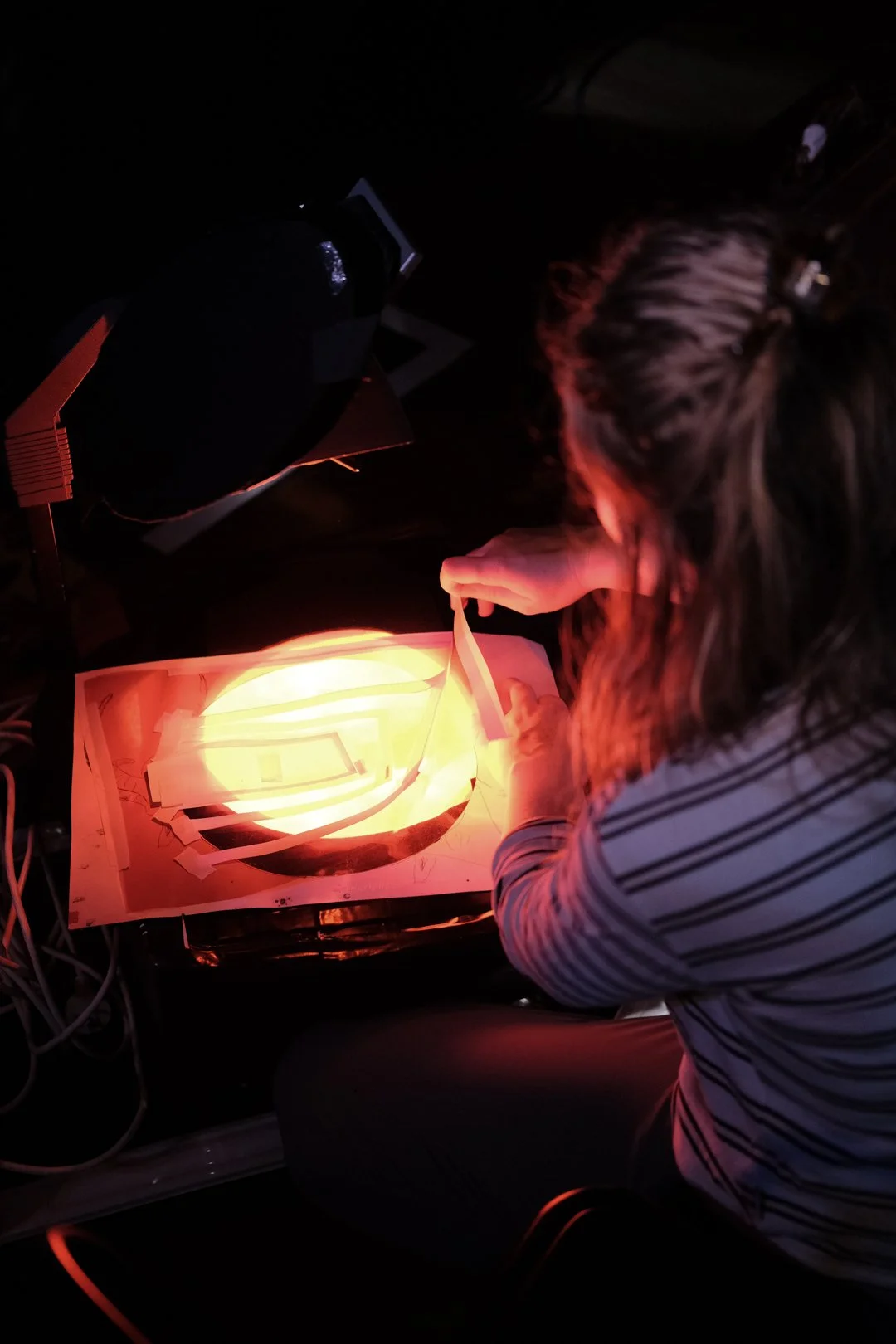
Firehawk - photo credit Jamie Simmons
“Someone always has a better idea than you,” she says matter-of-factly. It is a deceptively simple sentence, but it reveals a great deal about the way she leads. There is confidence in Anna's creative vision, but there is very little ego. She knows when to hold onto an idea, yet she is equally willing to let it evolve if someone else discovers a better way forward. That openness has shaped not only the productions themselves but also the culture of the company. Wren Wants a Top Hat feels less like a vehicle for one person's work and more like a place where artists can build something collectively, each contributing their own perspective to the final piece. It is perhaps why Anna seems just as excited talking about the people she creates with as she does about the work itself. Again and again, our conversation returns to collaboration—not as a practical necessity, but as a creative philosophy. The image of the solitary artistic genius has never interested her. The rehearsal room has. It is there, surrounded by actors, musicians, designers and fellow creatives, that ideas are challenged, reshaped and sometimes transformed into something entirely unexpected. For Anna, that process is not a compromise. It is the work.
Looking back over everything we have spoken about, it strikes me that founding a theatre company was never really about building an organisation. It was about building a home for the kinds of stories she wanted to tell and for the people who wanted to tell them alongside her.
Sitting With the Uncomfortable
By the time our conversation turns to Firehawk, I already know how the production ends.
I watched it last year in September as part of the Sydney Fringe Festival. Watching Firehawk was an emotional contradiction. It was thrilling, unsettling at times and, perhaps unexpectedly, quite anxiety inducing for me. Throughout the production, I found myself wanting to step onto the stage and help the characters, even though I knew I couldn't. Long after the final curtain, I found myself replaying scenes in my mind, trying to untangle what I had seen. It was the kind of production that refused to give its audience neat conclusions. Instead, it invited them to sit with uncertainty.
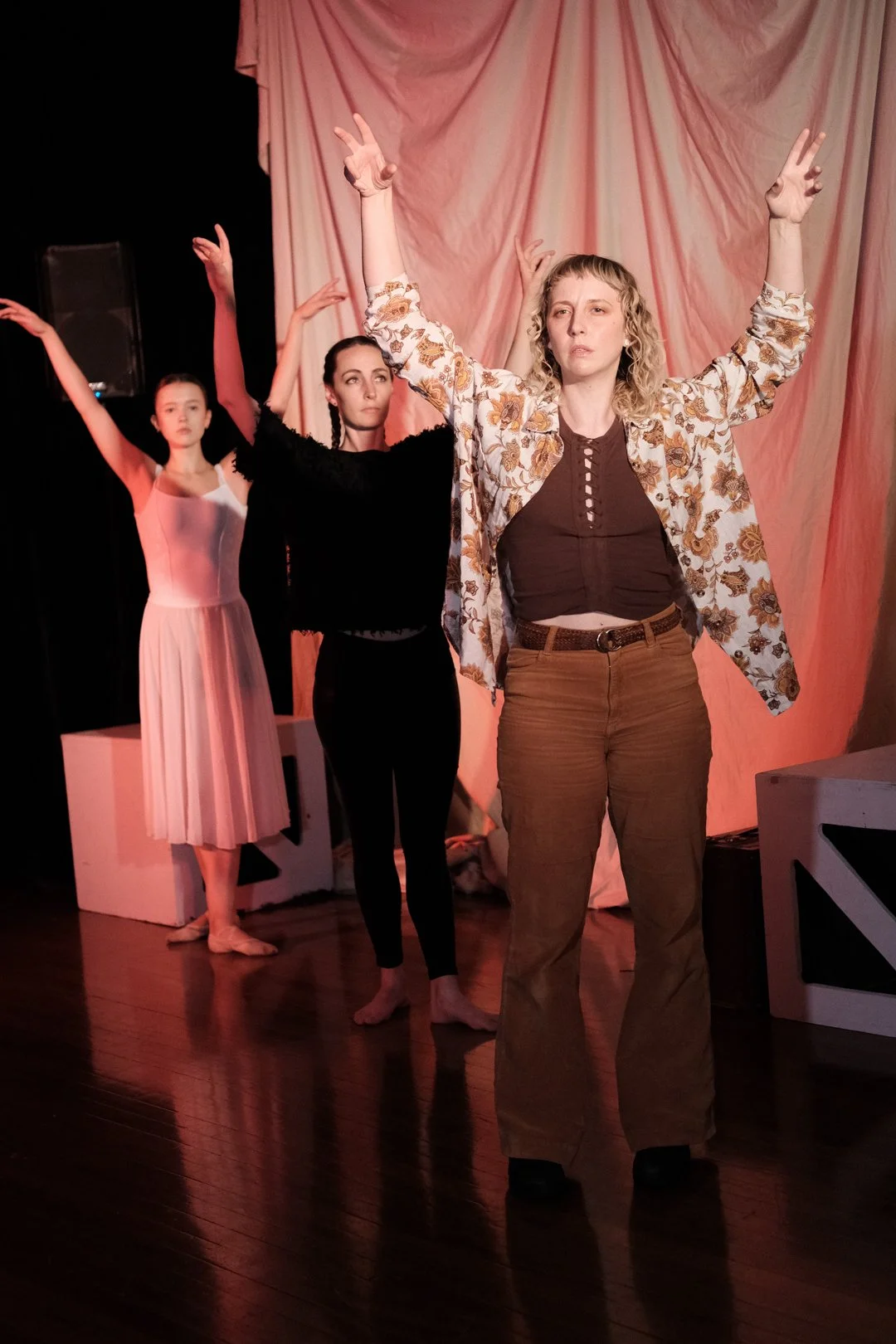
Firehawk - photo credit Jamie Simmons
For context (and not too give too much away in case Anna decides to re-stage the play), Firehawk is an original work of theatre set within a hotel, where reality and imagination intertwine to explore identity, trauma and the emotional landscapes we construct to make sense of our lives. “It is a metaphorical hotel,” Anna explains. On stage, the hotel appears to be a physical setting. In reality, it is something much more abstract. “Anything that happens on stage is actually within Verity's internal world.” It is one of those explanations that immediately reframes everything I had watched. Characters who initially seemed separate begin to feel connected. Conversations take on new meaning. The production becomes less about a place than about a mind trying to make sense of itself.
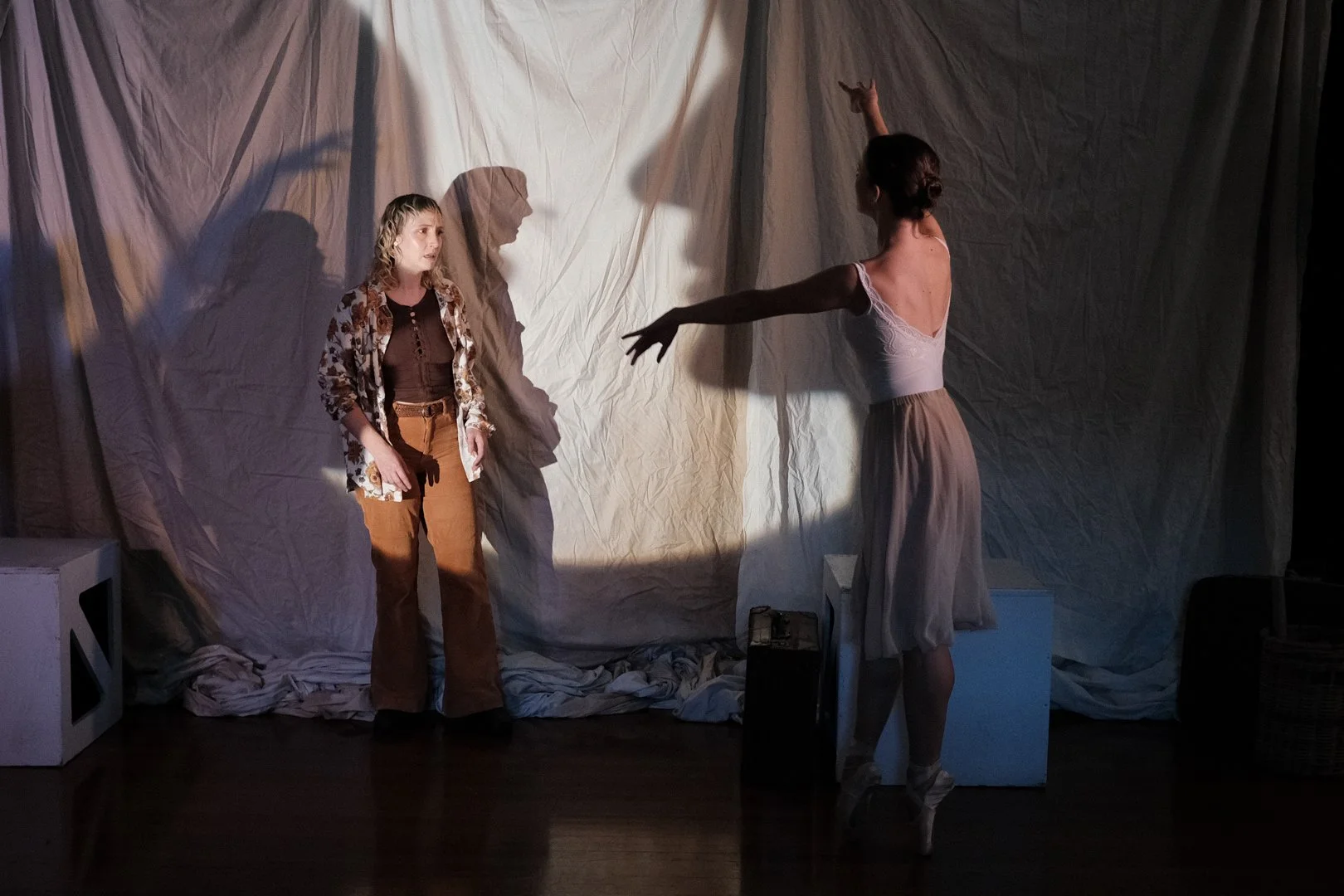
Firehawk - photo credit Jamie Simmons
Anna smiles as she describes the women at the centre of the story. “They could be sisters,” she says. “Or they could be three interpretations of the same person.” She does not insist on a single reading, nor does she want to. One of the pleasures of “Firehawk is that it trusts its audience to reach their own conclusions. Rather than providing definitive answers, Anna leaves space for interpretation, allowing different viewers to discover different truths within the same work.
As our conversation continues, another image from the production returns to me: the storm. “The storm is basically an external circumstance,” Anna explains. “And the fire is their reaction.” The simplicity of that observation belies its emotional weight. Life presents each of us with storms—grief, disappointment, fear, uncertainty. What interests Anna is not the storm itself but the choices people make once they find themselves inside it.
“You burn the place down because you do not know what else to do” she says. It is an arresting line and one that captures something fundamental about her writing. Anna is less interested in heroes or villains than in people navigating impossible situations. Her characters are flawed, contradictory and deeply human. They make mistakes. They search for meaning. Sometimes they destroy the very things they are trying to protect. It is also why her work lingers.
Many productions aim to resolve tension before the audience leaves the theatre. Anna seems more interested in leaving a question behind. Her stories ask viewers to keep thinking, to reconsider what they have seen and perhaps even to return to it later with a different perspective. "I love it when people disagree after seeing a show" she says. "It means they're still thinking about it." In a world that increasingly rewards instant opinions and quick conclusions, there's something quietly radical about creating work that asks people to sit with uncertainty. Anna doesn't write to resolve complexity. She writes to make us curious enough to stay with it. As I listen, I realise that this is exactly what Firehawk had done to me. Almost a year after seeing the production, I was still thinking about it. Perhaps that was the point all along.
Stories Revisited
One theme surfaced so consistently throughout our conversation that, by the end of lunch, it felt impossible to ignore.
Anna is drawn to stories that already exist. Not because she wants to retell them exactly as they have always been told, but because she believes there is still something left to discover within them. Whether she is working with mythology, folklore or historical narratives, Anna approaches each story with the same quiet curiosity. She is less interested in preserving it than in asking what has been overlooked. Whose perspective has not yet been explored? What emotional truths remain hidden beneath the version we already know? That instinct first drew her to Undine, where she shifted the focus away from the familiar romance and towards the relationship between Undine and Bertalda.
Rather than accepting the original tale as fixed, Anna looks for the questions that still felt unresolved. That same curiosity has continued to shape her work ever since. One of the clearest examples is River Ghost. When I ask whether she sees it as a companion piece to Undine, Anna smiles. “Undine and River Ghost are variations of each other.” She pauses for a moment before adding another thought. “I would not call River Ghost a new sister.” Instead, she laughs, “She is the first sister who has had a makeover.” It is a wonderfully Anna way of describing the relationship between the two productions, warm, playful and unexpectedly revealing. Although the works share common themes and creative DNA, River Ghost is not simply a revival or an updated version of an earlier play. “It is essentially a new play,” she explains. The transformation reflects the way Anna approaches storytelling more broadly. Her work is never static. Ideas continue to evolve as she grows, as new collaborators contribute their perspectives and as earlier questions lead to entirely new ones. “I was trying to update it so it was more like Firehawk,” she says. That comment says as much about Anna's creative process as it does about the production itself. She does not leave her work behind once opening night arrives. She revisits it, challenges it and asks what she has learnt since she first wrote it. Earlier productions become conversations with later ones, each informing the next.
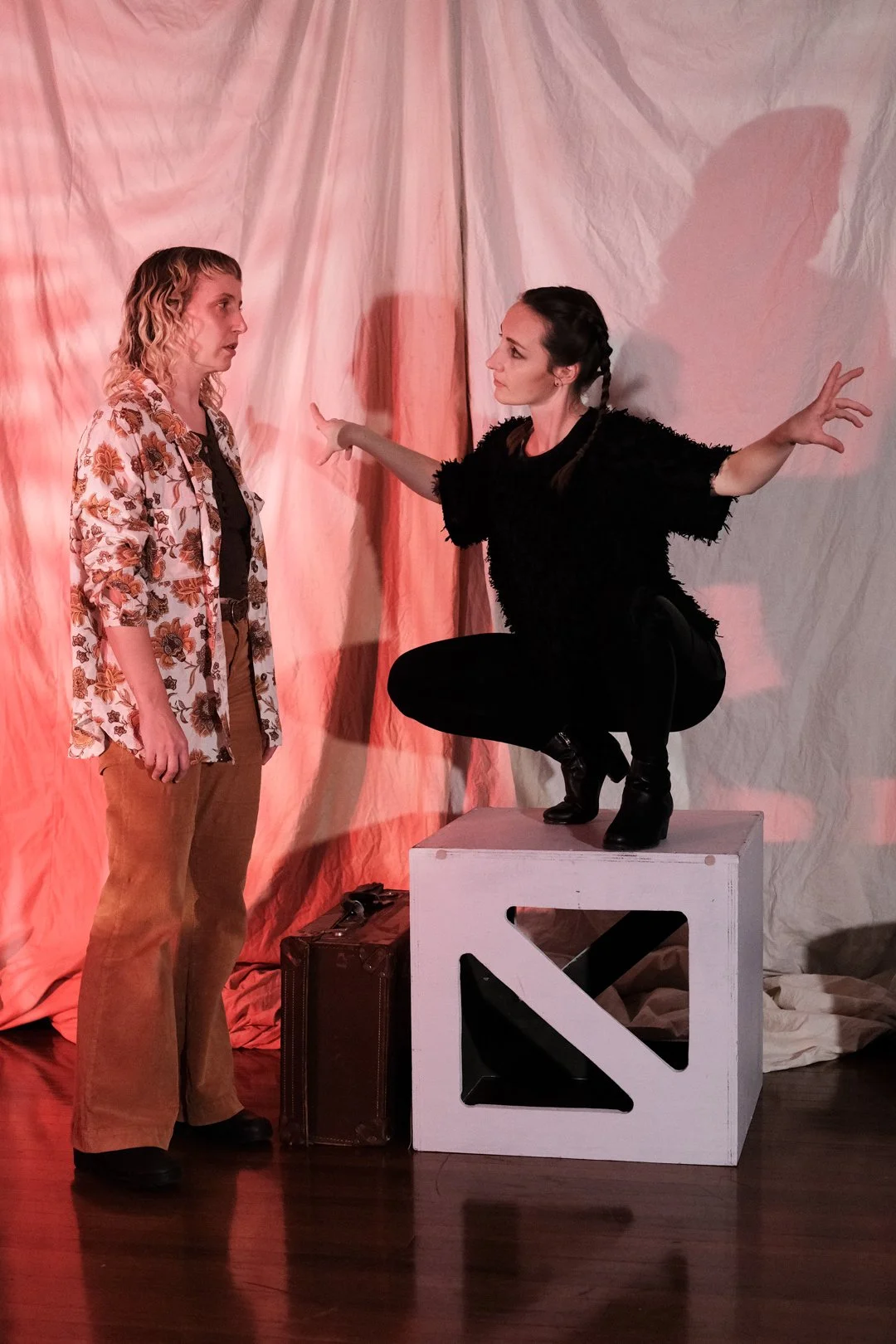
Firehawk - photo credit Jamie Simmons
Listening to Anna, I begin to realise that she is not interested in creating definitive versions of stories. She is interested in keeping them alive. Perhaps that is why mythology continues to resonate with her. These stories have survived for centuries because every generation has found something new within them. Anna's work belongs to that same tradition. She honours the stories that came before her, while creating space for new voices, new questions and new ways of seeing.
For Anna, revisiting a story is never about looking backwards. It is about discovering what it still has to say.
After the Curtain Falls
As our lunch comes to an end, we both find ourselves eager to continue our conversation, but the real world beckons.
On my way home, I reflect on our conversation and the word that captures it all is consistency. There is a consistency to the way Anna moves through the world. Whether she is organising a year 5 production, reimagining a nineteenth-century myth or building an independent theatre company, the instinct is the same. She follows her curiosity, asks another question and quietly gets on with making it work.
There is no sense that she has everything figured out. In fact, quite the opposite. Again and again, Anna speaks about each production as something that teaches her how to make the next one. Undine led to River Ghost. River Ghost evolved after Firehawk. Every play becomes part of an ongoing conversation rather than a finished destination. It strikes me that this may be what separates Anna from many artists. She is not chasing perfection; she is chasing discovery. Her stories are not trying to provide definitive answers. They invite audiences to linger in uncertainty, to return to familiar ideas from a different angle and to consider possibilities they may not have noticed before.
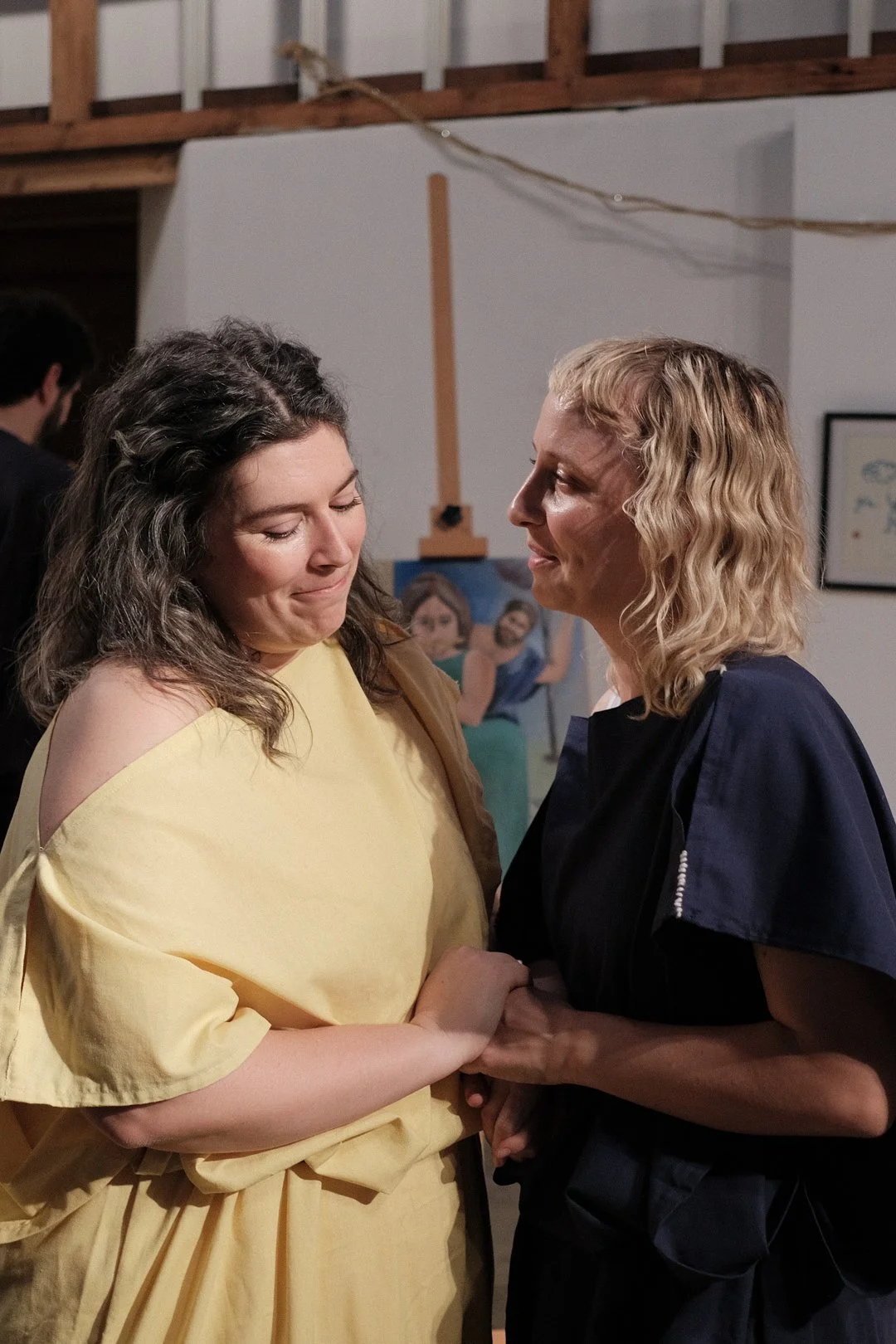
Diotima - photo credit Jamie Simmons
I had arrived wanting to learn how someone writes, directs, produces and composes a play. I left understanding that, for Anna, those are simply different ways of asking the same question.
How do you tell a story that stays with people long after the curtain falls? Judging by the conversations I was still having with myself almost a year after seeing Firehawk, Anna is already well on her way to answering it.
What is Next: The River Ghost
Anna’s latest production, The River Ghost, is coming to Sydney Fringe Festival this September from 23 to 27 September.
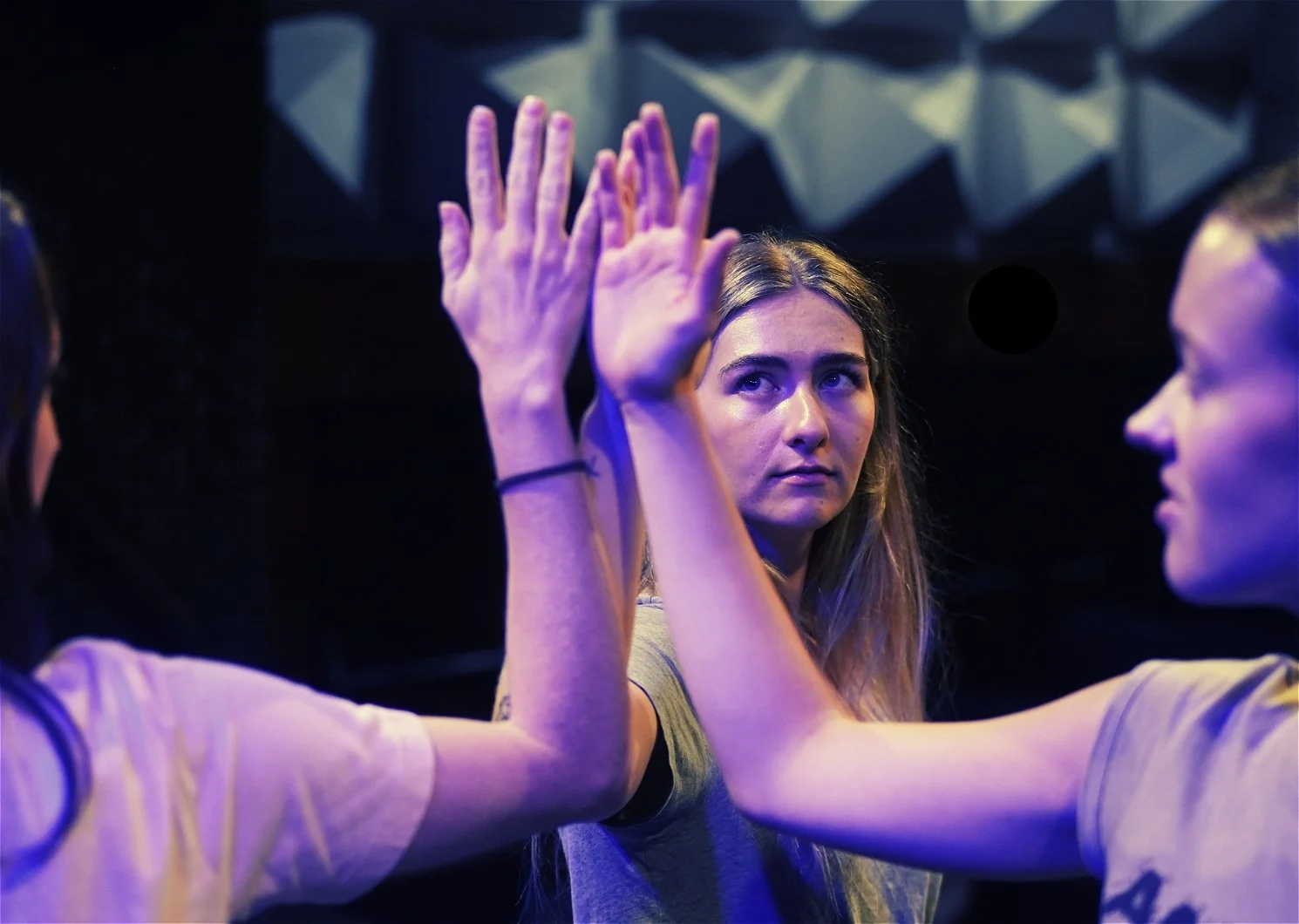
The River Ghost - photo credit Nathaniel Kong
Inspired by folklore and myth, The River Ghost follows a woman who encounters a mysterious spirit inhabiting the river's edge. Through music, movement and theatrical storytelling, the production explores memory, grief, transformation and the invisible threads that connect us to the past. Atmospheric and emotionally rich, it promises to immerse audiences in another of Anna's beautifully imagined worlds.
If you have never experienced one of Anna's productions before, I highly encourage you to go and if you have, you already know that you are in for something incredibly special.
Get your tickets here.
Yours, in style and curiosity
—
Linda Mulenda